This article is an extract from the January 2026 edition of "Irish Grid Monthly". To receive the full edition on the 1st of each month, subscribe to our newsletter.
Summary
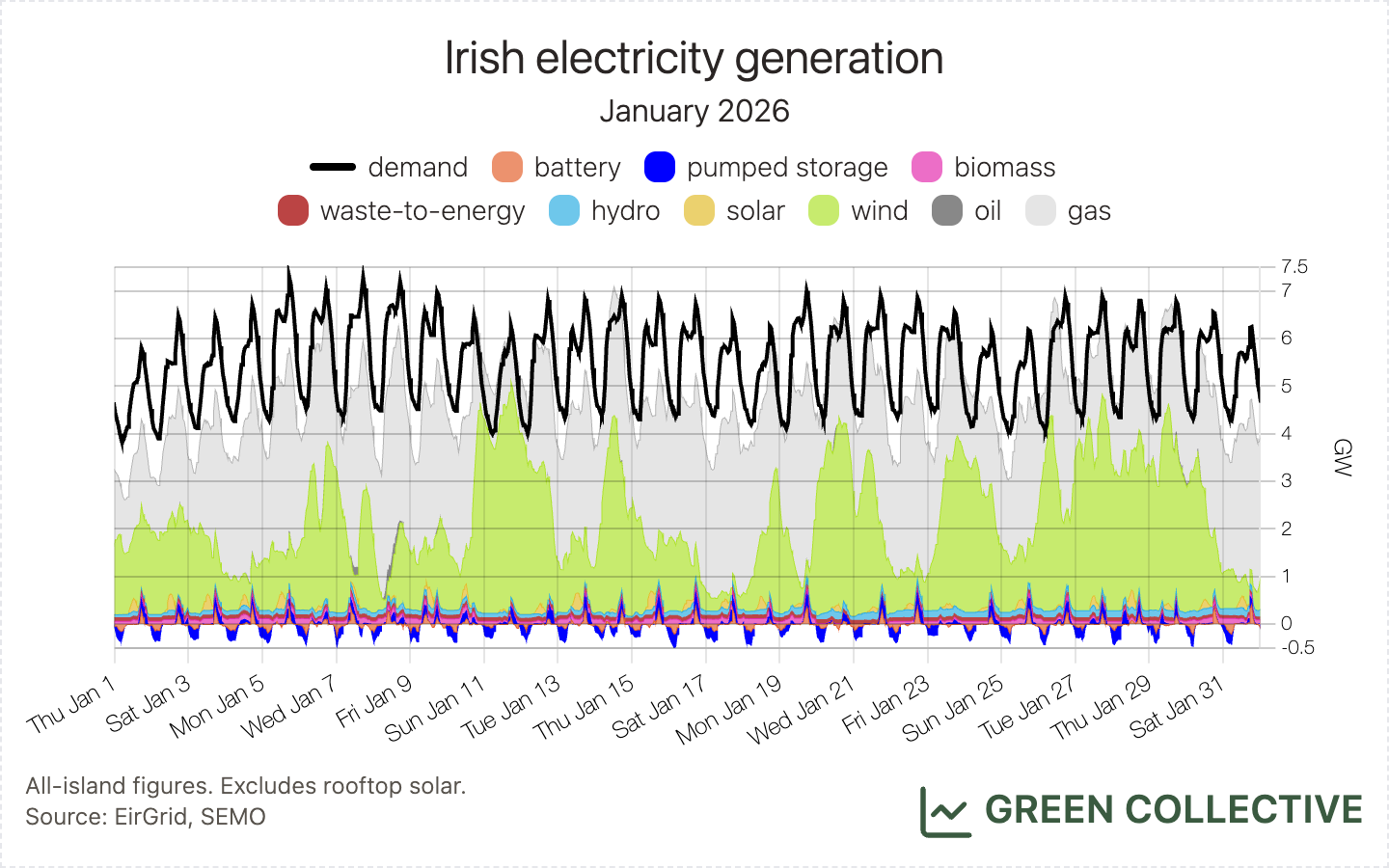
Electricity demand on the island of Ireland during January 2026 totalled 4087.9GWh, a 4.5% increase from January 2025. This was the highest electricity demand ever experienced in Ireland in a single month and it's the first time demand in a single month has exceeded 4TWh.
How that record demand was met:
- Renewable generation equalled 38.5% of demand.
- Fossil fuel generation equalled 47.1% of demand. This is the first time fossil fuel generation has totalled less than 50% of demand in a January month.
- Net imports equalled 13.1% of electricity demand. This was the highest percentage of demand yet imported in a January month and should come as no surprise since this is the first January in which the Greenlink interconnector has been fully operational.
Renewables
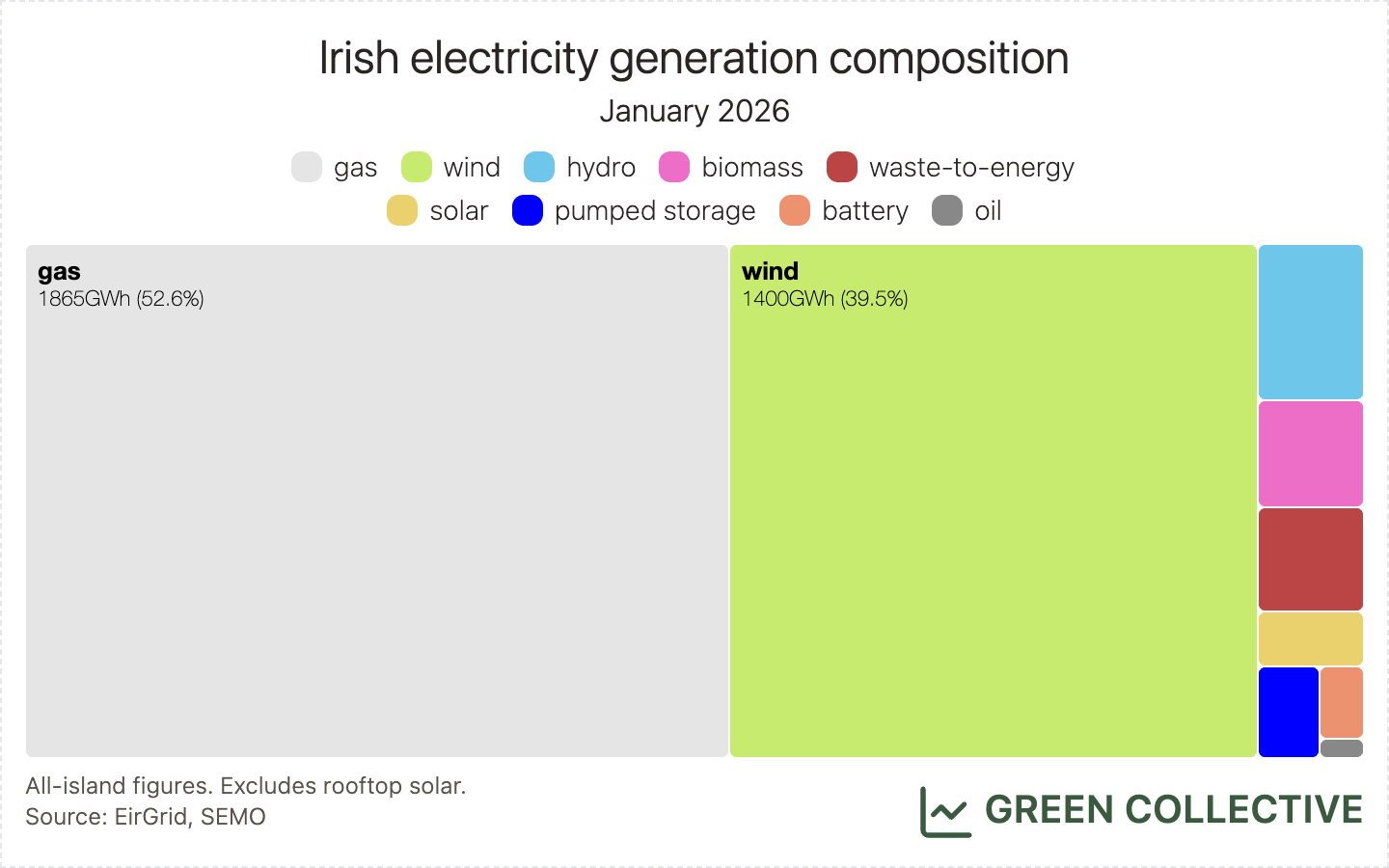
Renewable generation during January 2026 totalled 1575.6GWh, equivalent to 38.5% of demand. This was the second-highest total for renewable generation for a January month, behind only January 2023's 1609.4GWh. Due to rising demand, this was only renewables' fourth-highest share of demand in a January month.
A full breakdown of renewable generation:
- biomass: 59.3GWh / 1.4% of demand
- hydro: 85.6GWh / 2.1% of demand
- wind: 1400.5GWh / 34.3% of demand
- solar: 30.2GWh / 0.7% of demand
Regarding January's wind and solar:
- 1400.5GWh from wind farms was about average for a January month. While it was well up from January 2025's 1273.4GWh, we first saw 1.4TWh in a January month as long ago as 2018; January wind generation remains flat, at best.
- 30.2GWh from solar farms represents a rare year-on-year drop in generation vs. January 2025's 31.4GWh. The only other year-on-year monthly drop in solar generation in the last few years was in October 2025; while capacity did rise in 2025, the weather certainly was particularly poor this year and so we don't think this is necessarily the start of a new trend.
Storage
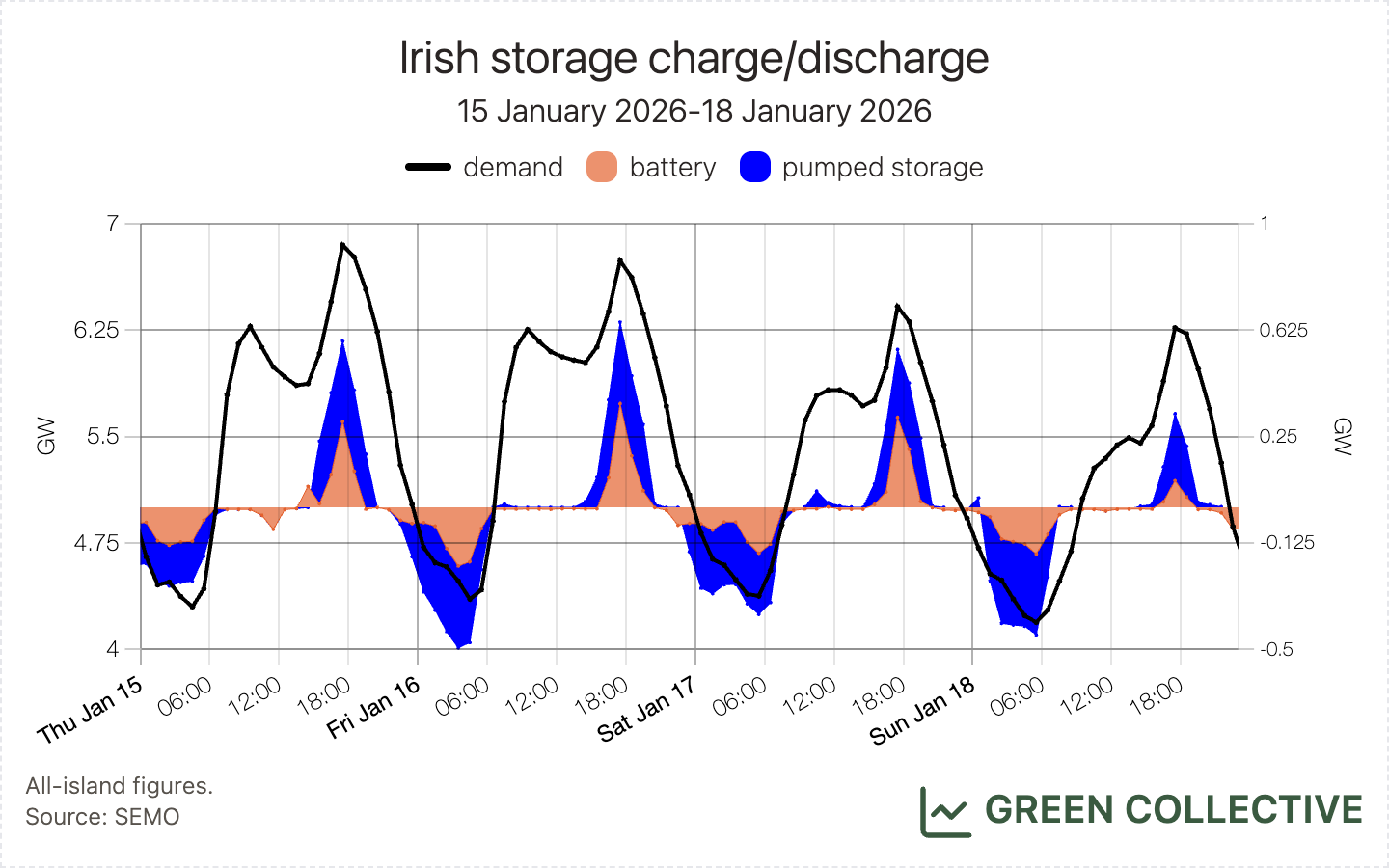
16.2GWh of battery discharge was by far the most of any single calendar month, up a whopping 40% month-on-month from December 2025's 11.9GWh.
Despite some important caveats (explained in detail in the most recent issue of our Benchmarking Batteries series), the fruits of the grid's new scheduling and dispatch programme launched during November are becoming clearer: discharge during the evening peak now regularly (10 days in January) exceeds 300MW unless wind generation is extremely strong. This is equivalent to roughly 5-6% of current winter evening peaks and means that batteries are finally starting to match Turlough Hill in terms of MW, if not (just yet) MWh.
Fossil fuels and carbon emissions
Fossil fuel generation totalled 1925.7GWh, or 47.1% of demand. Common in February for the past several years, this is the first time fossil fuels have equalled less than 50% of demand in a January month. In fact, fossil fuel generation has now fulfilled less than 50% of demand every single month since August 2025.
A full breakdown of fossil fuel generation:
- gas: 1864GWh / 45.6% of demand
- oil: 3.8GWh / 0.1% of demand
- waste-to-energy: 56.7GWh / 1.4% of demand
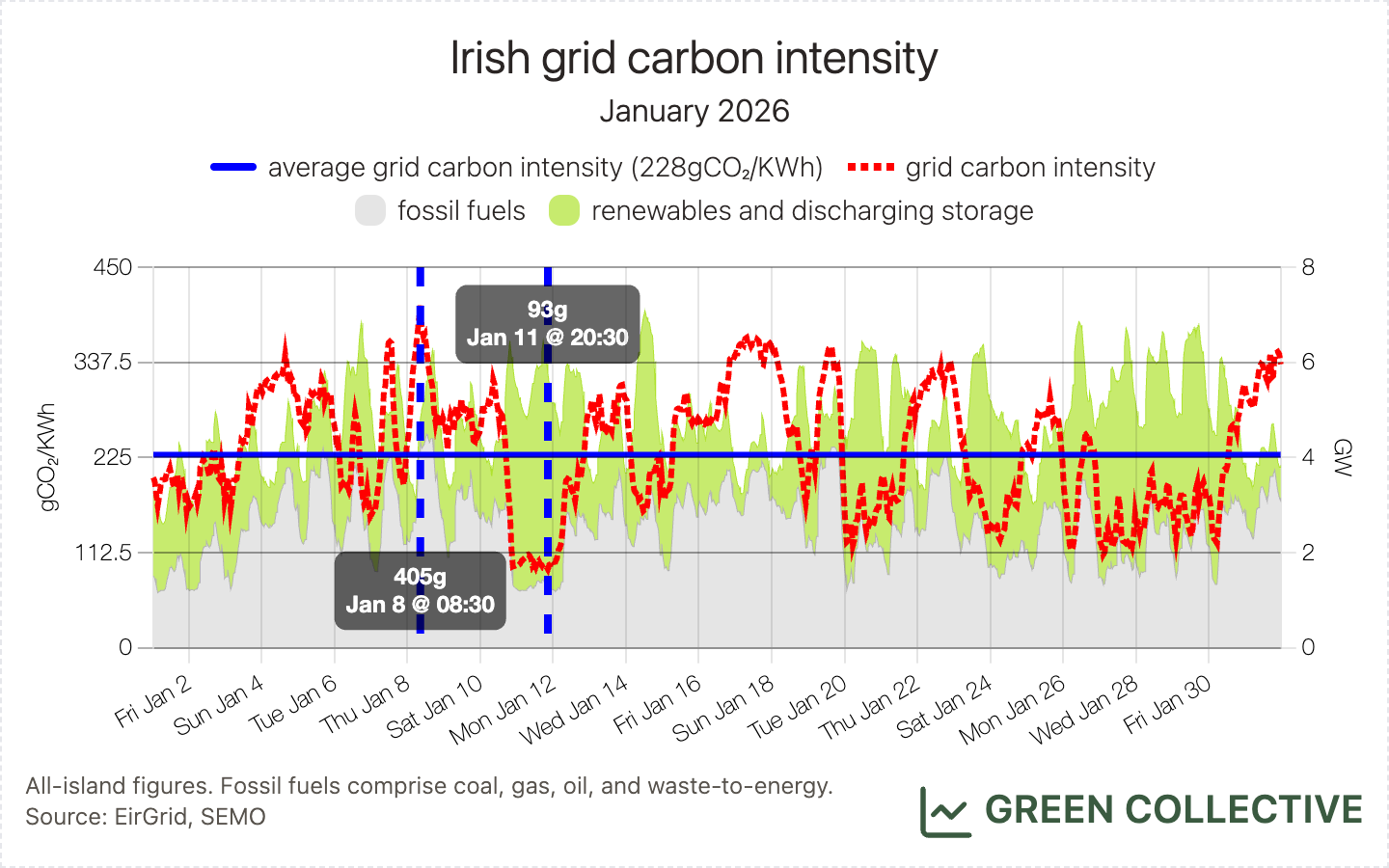
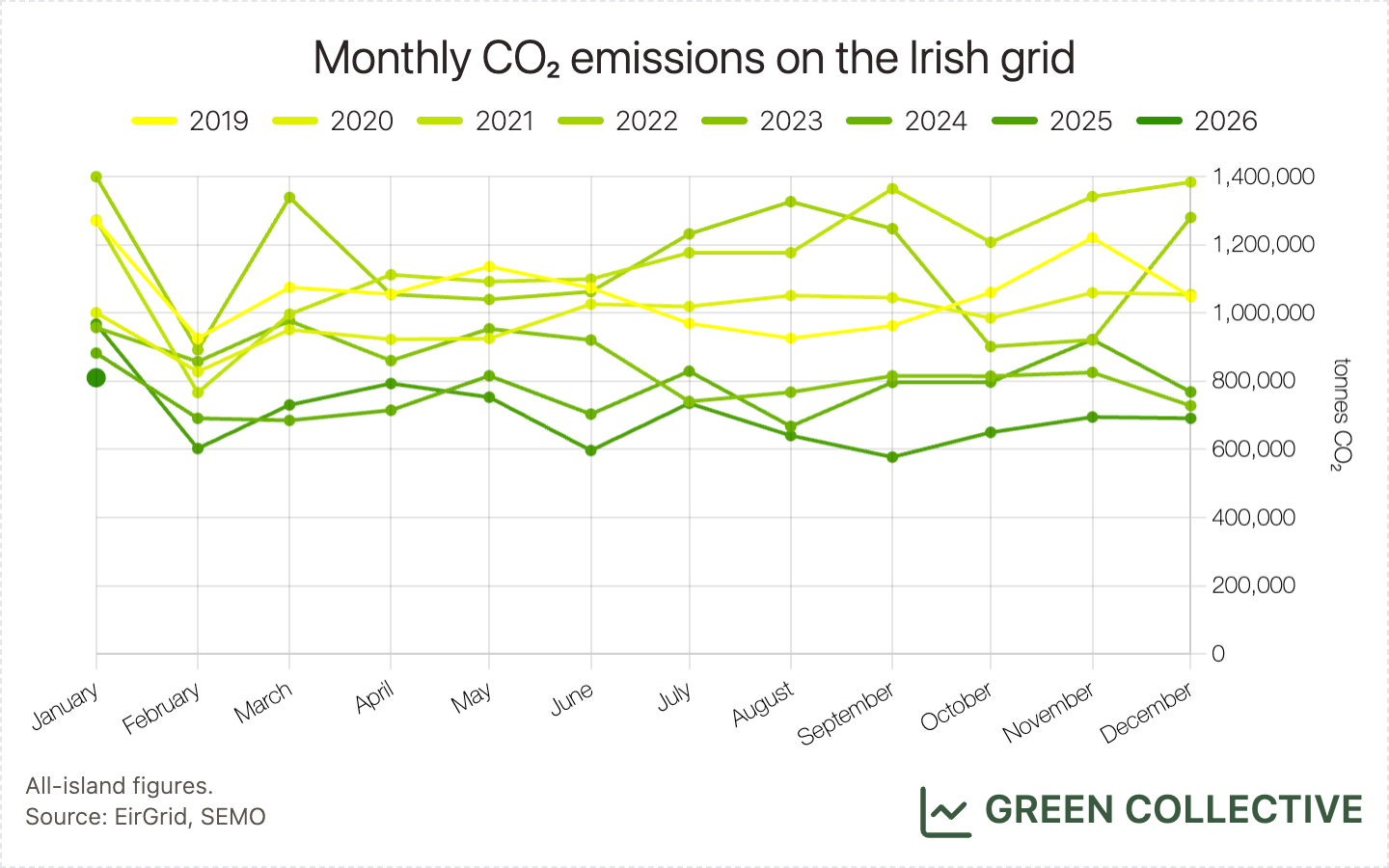
We estimate that during January 2026 the Irish grid emitted approximately 810,000 tonnes of CO₂, emitting between 93g and 405g of CO₂ for each kWh of electricity generated for an average grid carbon intensity of 228gCO₂/KWh.
This was both the lowest average grid carbon intensity and amount of CO₂ emitted in a January month. This is the sixth month in a row we've been able to report this in this newsletter: another impressive streak for the grid. How is this happening? This is the first winter without coal and, more significantly, the first winter with increased imports via Greenlink.
County-level rankings
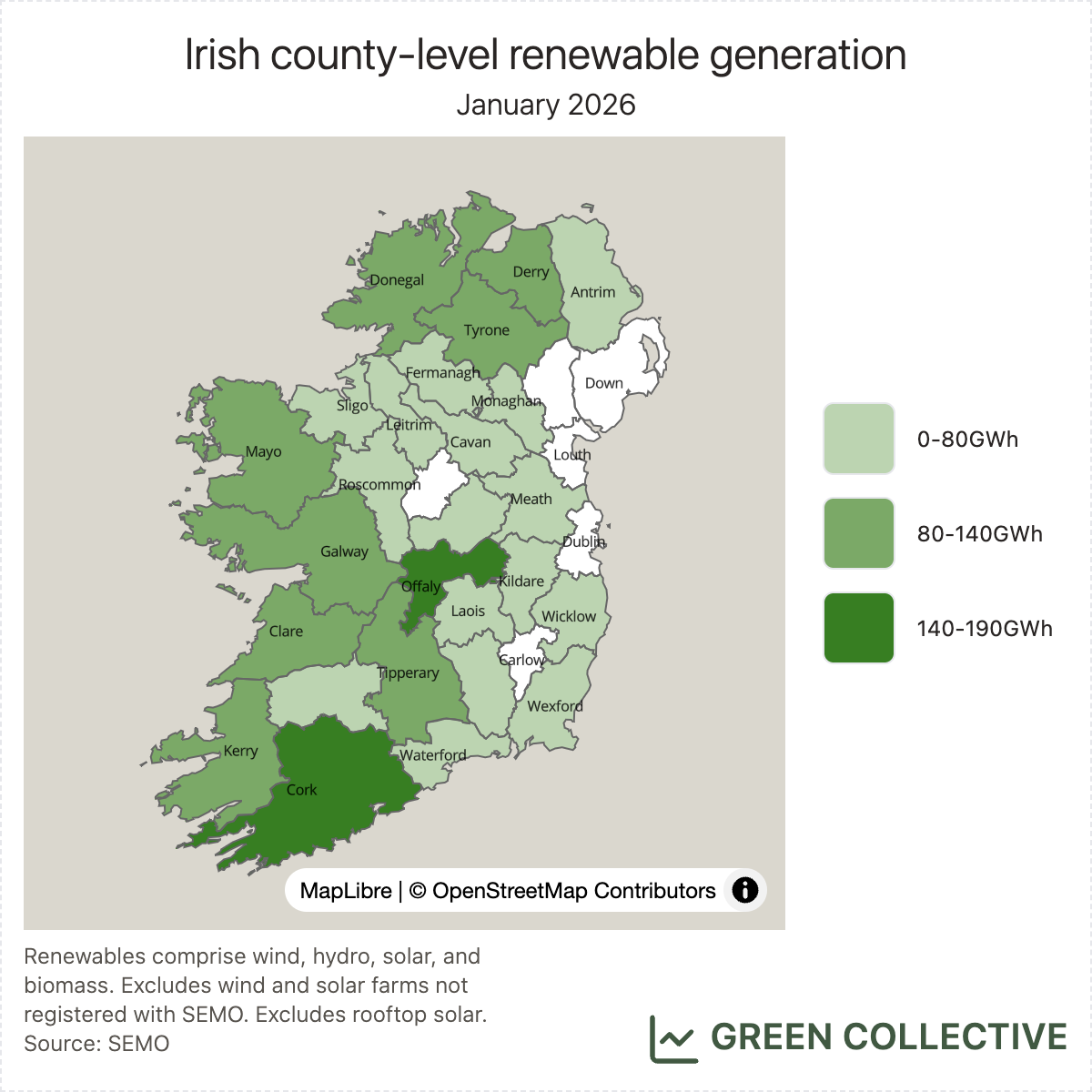
The top five renewable-producing counties during January 2026 are:
- Offaly
- Cork
- Kerry
- Derry
- Donegal
This is the first time Offaly has produced the most electricity from renewable sources in a calendar month and it did so by a country mile, producing over 30% more electricity from renewable sources than the next closest county, Cork.